
- Home
- Commercial Project Types
- Distribution Center Roofing in Las Cruces, NM
Commercial Project Types
Distribution Center Roofing in Las Cruces, NM
Roof Systems for Rail-Adjacent Distribution Centers Near Santa Teresa
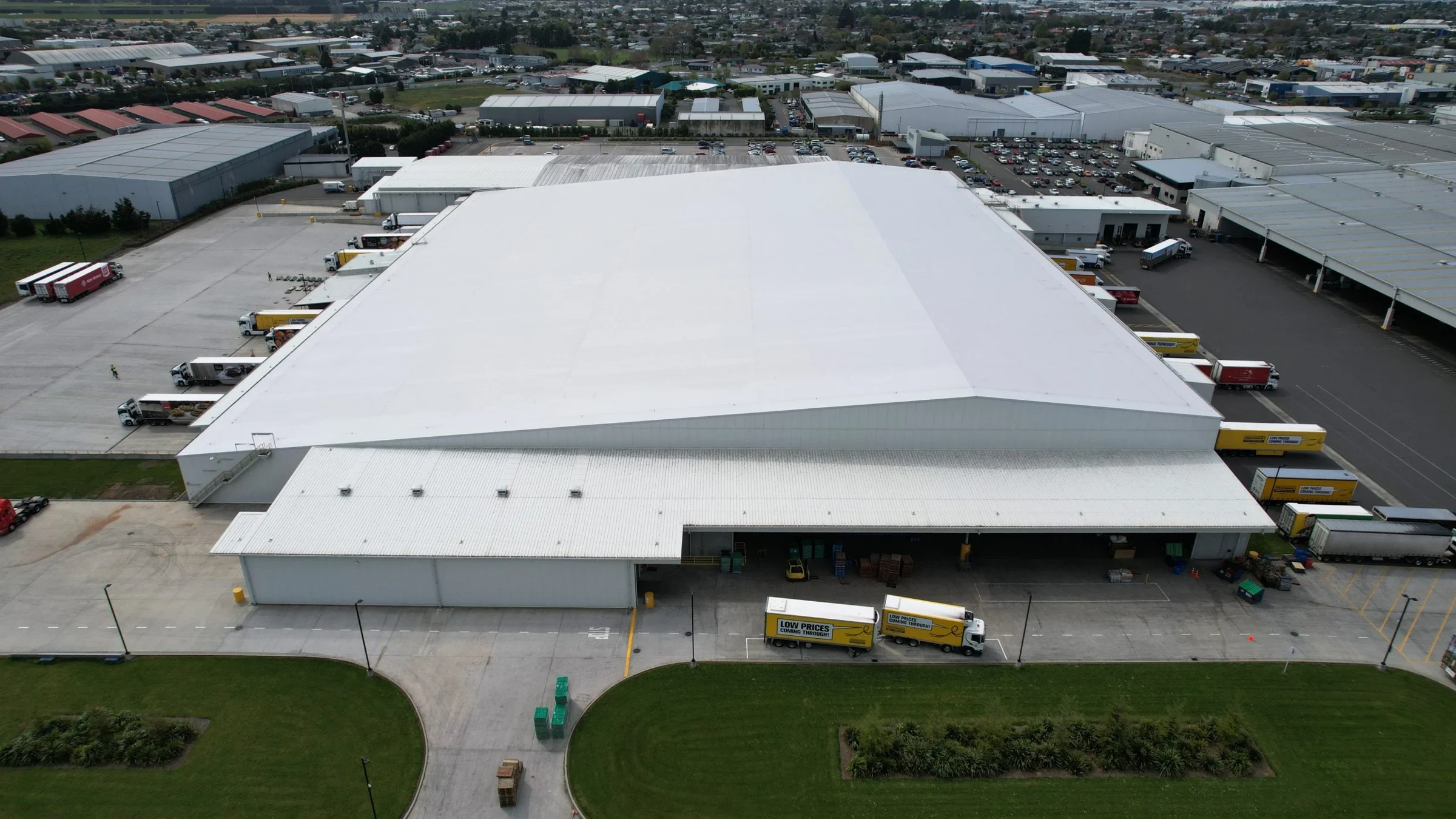
Distribution centers near the Santa Teresa port of entry and the Union Pacific intermodal yard run a noticeably different operating rhythm than a typical inland warehouse - cross-dock configurations, conveyor systems tied directly to rooftop units, and trailer traffic that never really slows down across a full 24-hour cycle. The roof over that operation has to keep up without ever forcing a shift change to wait, and without ever becoming the reason a scheduled trailer misses its loading window.
Rail Dust and Border Traffic Change the Maintenance Math
Buildings near the intermodal yard and heavy trailer corridors collect noticeably more airborne particulate over the course of a year than a distribution center set well back from rail and truck traffic would ever accumulate. That dust settles into roof drains and around rooftop unit curbs, and it clogs scupper screens well ahead of the interval a manufacturer's standard maintenance schedule would typically assume for a comparable building. We check drain and scupper clearance more often on these buildings specifically because of where they sit.
Diesel exhaust from constant trailer idling also accelerates membrane surface degradation near loading areas compared to the rest of the roof. We track wear patterns section by section instead of assuming uniform aging across the whole roof plane.
Wind-blown grit off the surrounding desert terrain adds a third wear factor specific to this stretch of the valley. Open ground on multiple sides of a distribution building means less natural windbreak than a facility built into a denser commercial area, and abrasive dust settling on the membrane surface during a dry spell accelerates surface wear ahead of what a manufacturer's warranty schedule assumes.
Conveyor and Cross-Dock Roof Penetrations
Cross-dock distribution buildings often route conveyor drive units, sortation equipment, and dust collection systems through the roof deck, and each penetration is a potential leak point if the curb wasn't built to the height current code requires. We inspect every roof-mounted mechanical curb during a full assessment, covering sortation and conveyor equipment alongside standard HVAC units, because sortation equipment penetrations get missed in routine roof inspections more than any other category we see.
Rooftop units serving conveyor and climate-controlled sortation areas also run near-continuously in a 24-hour distribution operation, and that constant vibration loosens fastener patterns around curbs faster than the intermittent HVAC cycling a standard office building would ever experience over the same stretch of time.
- Cross-dock sortation and conveyor-fed distribution buildings
- Bonded warehouses handling cross-border freight
- Rail-served transload facilities
- Parcel and last-mile delivery hubs
- Cold-chain distribution centers with dock-level refrigeration
- Trailer parking and yard support structures
Scheduling Around 24-Hour Operations
Distribution centers near the border often run multiple shifts to keep freight moving through the port of entry without delay, which means there's rarely a truly quiet window for roof work. We plan noisy phases like tear-off and mechanical fastening around shift change gaps where possible, and we keep an open line with dock supervisors so an unplanned trailer surge doesn't collide with a crane pick.
We also stage material away from active dock doors and trailer queuing lanes at every hour of a shift cycle, since a distribution center's efficiency depends on keeping those lanes clear around the clock rather than only during a standard daytime window.
Security protocols near a border-adjacent facility can add another layer most inland warehouses skip - credentialing for crews, vehicle inspections at the gate, and coordination with customs-bonded area restrictions if part of the building falls under that designation. We confirm those requirements with the site's security office before mobilization so the first day isn't lost to paperwork nobody flagged in advance.
Drainage Design for Large Cross-Dock Roofs
Cross-dock buildings often have interior drain lines running through the building core rather than perimeter scuppers, and a clog in one of those interior drains is harder to spot from the ground than an overflowing scupper. We recommend camera-scoping interior drain lines as part of a full roof assessment on these buildings, since a blocked interior drain can cause ponding that isn't visible from any exterior vantage point.
Where drainage capacity is marginal for the roof's actual rainfall load during a monsoon burst, we look at adding overflow scuppers as a lower-cost alternative to re-piping interior drain lines.
Questions From Distribution Center Facilities Teams
Can you work around a 24-hour shipping operation?
Yes. We plan the loudest work around shift changes and coordinate crane and material staging directly with dock supervisors to avoid blocking active lanes.
How do you find leaks in a large cross-dock building with interior drains?
We camera-scope interior drain lines and use moisture scanning across the roof deck, since interior drain clogs don't show up as an obvious overflow the way perimeter scuppers do.
Does dust from rail and trailer traffic really affect the roof?
Yes - it accumulates in drains and around curbs faster than at buildings set back from heavy traffic, so we check clearance on these roofs more frequently.
What roof penetrations get missed most often on distribution buildings?
Conveyor and sortation equipment curbs are the most commonly missed penetration type in routine inspections, since they're not always on a standard HVAC-focused checklist.
Do you offer overflow scupper additions instead of re-piping drains?
In many cases yes, when the existing drain lines have enough baseline capacity and the issue is really about handling monsoon-level burst rainfall rather than a chronic blockage.