
- Home
- Commercial Roofing Services
- Storm Damage Roof Repair in Las Cruces, NM
Commercial Roofing Services
Storm Damage Roof Repair in Las Cruces, NM
Telling Storm Damage Apart From Ordinary Desert Wear
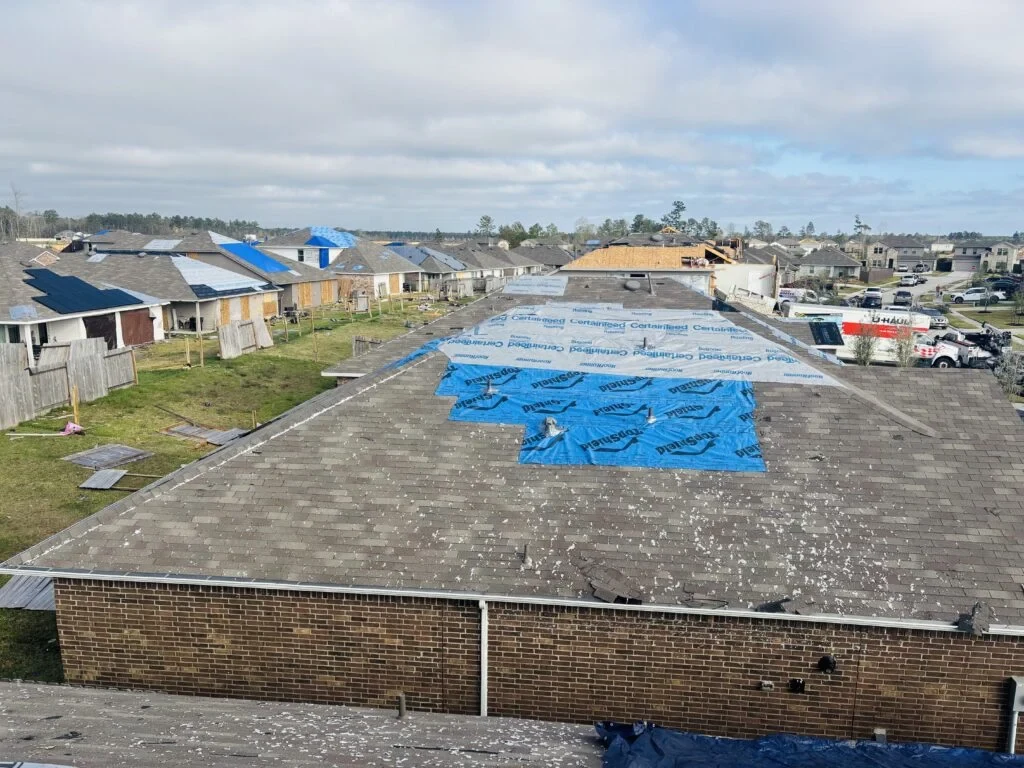
A monsoon microburst can do real damage to a commercial roof in about ten minutes, wind-lifted membrane, hail bruising, debris punctures. But not everything wrong with a roof after a storm actually came from that storm, and separating the two matters for how a repair gets scoped and, often, how it gets paid for. We walk that line honestly instead of blaming everything on the last weather event.
What a Monsoon Storm Does to a Flat Roof
Monsoon cells here don't build slowly. A calm afternoon can turn into fifty-mile-an-hour wind gusts and marble-sized hail within a matter of minutes, and a flat or low-slope roof takes that impact across its whole surface at once, rather than concentrated on a single sloped section facing the storm.
Wind uplift tends to hit membrane edges and corners hardest, where fastening patterns are already under the most stress. Hail bruises membrane and can crack pitch pans or vent boots outright. We see both patterns regularly after a strong summer storm cell moves through the valley.
Dust Storms Bring Their Own Kind of Damage
Wind events out here aren't always wet. A dry dust storm ahead of a monsoon cell can drive debris, gravel, and tumbleweed fragments across a roof at real speed, and that debris does mechanical damage on its own, abraded membrane, dented curbs, punctured coating on a coated roof system. It also loads drains and scuppers with material that then contributes to ponding once the rain actually arrives behind it.
We check both halves of that sequence after a major event, the wind and debris damage from the dust storm itself, and the drainage consequences once rain follows. Treating them as one event usually misses part of the picture. A roof that shows abraded membrane but no ponding might have taken dust-storm damage without a follow-on rain event yet, and that distinction changes how urgently we recommend a repair.
How We Tell Storm Damage From Years of UV Wear
This is where an honest assessment matters most. A membrane that's already brittle from years of UV exposure can look a lot like storm-damaged membrane to an untrained eye, but the failure patterns are different. Storm damage tends to be localized, directional, and tied to specific impact points or wind-exposed edges.
- Directional creasing or tenting consistent with a specific wind event
- Hail bruising or punctures clustered on storm-facing slopes and edges
- Fresh debris impact marks distinct from gradual UV chalking
- Displaced coping, curb caps, or flashing consistent with a recent wind load
- New ponding patterns tied to storm-clogged drains rather than long-term settling
Widespread UV chalking, brittle membrane across the whole field, and gradual seam separation everywhere is a different story, that's age, not a single storm event, and we say so plainly rather than characterizing ordinary wear as storm damage just because a claim might cover more that way.
Repair Sequencing After a Major Event
After a significant storm we prioritize repairs the same way we prioritize leak calls, active water intrusion first, then compromised sections that are likely to fail under the next storm, then cosmetic or minor damage that can wait for a scheduled visit. That order keeps the building protected without turning every dent into an emergency.
For buildings with multiple damaged areas, we group repairs into a single mobilization where possible rather than running the crew back out for each item separately, which keeps cost and disruption down for the facility. On larger sites with several distinct damage points, we'll often stage repairs by roof zone so equipment and material only move once instead of shuttling back and forth across the building.
Working With Your Documentation, Not Promising an Outcome
We photograph and document storm damage thoroughly, dated, located, and described plainly, because that record is useful whether you're managing an insurance claim, budgeting a capital repair, or just tracking the building's history. What we don't do is promise a claim outcome. We describe what we found and what it would take to repair it, and we leave the coverage decision where it belongs, with the insurer and the adjuster. That approach has served our clients well over repeated storm seasons, because a documentation record built on accuracy holds up better than one built to maximize a number.
Storm Damage Questions From Facilities Managers
How soon after a storm should we get an inspection?
As soon as reasonably possible, especially if there's any sign of water intrusion. Delayed inspection can let a small storm-caused breach turn into a bigger interior problem before anyone notices.
Can you tell the difference between storm damage and old wear on our roof?
Yes, that's a core part of any storm assessment we do. Storm damage has directional and localized patterns, while UV wear tends to be gradual and spread evenly across the field of the roof.
Will you help with our insurance claim?
We provide thorough documentation and a factual scope of what needs repair, but we don't promise or guarantee a claim outcome. That decision sits with your insurer and adjuster.
Do dust storms actually damage a roof, or just make it dirty?
They can cause real mechanical damage, abraded membrane, dented metal, punctured coating, in addition to loading drains with debris that causes ponding once rain follows.
What gets fixed first after a major storm?
Active leaks and compromised sections likely to fail in the next storm come first, followed by other storm damage, with minor cosmetic issues handled on a normal maintenance schedule.