- Home
- Industries We Serve
- Storm Damage and Insurance Restoration Roofing in Las Cruces, NM
Industries We Serve
Storm Damage and Insurance Restoration Roofing in Las Cruces, NM
Documentation That Holds Up With Adjusters
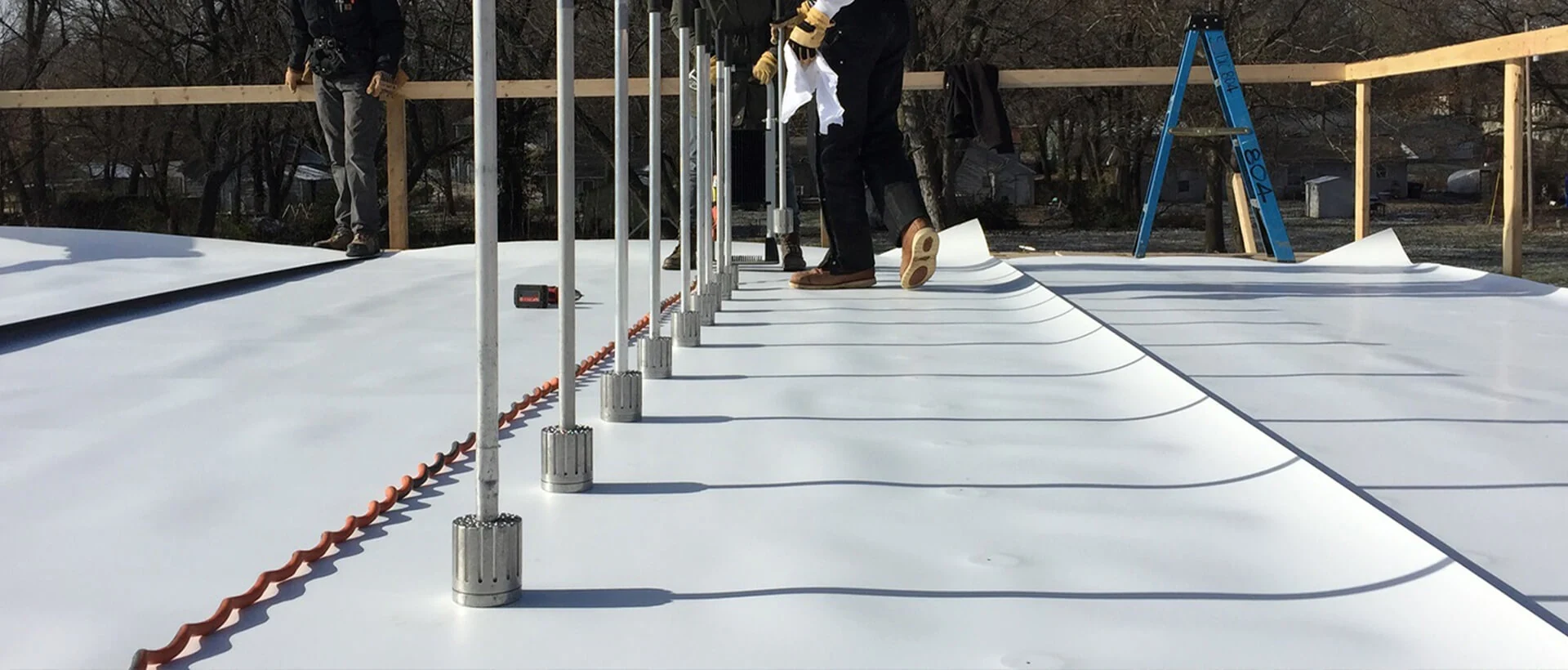
Monsoon season brings hail cells and straight-line wind gusts through Las Cruces and the Mesilla Valley most summers, and when one of those storms tears membrane or dents rooftop equipment, the roof damage is only half the job - the other half is documentation an adjuster can act on without a second site visit.
Emergency Response Comes First
A torn membrane or a punctured roof after a hailstorm needs a tarp and dry-in before it needs a claim number. We prioritize stopping active water intrusion the same day a storm damage call comes in, because every hour a building sits open to weather turns a roof claim into a larger interior damage claim, and that's a cost nobody wants to argue about with an adjuster later.
Once the building is weathertight, we slow down and document properly rather than rushing into permanent repair before the claim process has caught up. Repairing damage before it's documented can complicate a claim more than it helps.
Documentation an Adjuster Can Use
We photograph damage systematically - wide shots showing storm pattern across the whole roof, close-ups of specific damage points, and reference shots that establish scale and location. Wind damage and hail damage read differently to a trained eye, and we document which pattern we're seeing so the report supports the claim instead of leaving the adjuster to guess.
Scope of loss estimates we prepare break out material and labor the way carriers expect to review them, with manufacturer specifications attached for any system we're recommending as part of the repair or replacement. We don't pad a scope to inflate a claim, and we don't undersell one either - the estimate reflects what the roof actually needs.
Working With Adjusters and Public Adjusters
We meet adjusters on-site when a building owner wants us there, walk the roof together, and point to specific damage rather than arguing in general terms. When a building owner has engaged a public adjuster, we coordinate documentation with them too - our job is providing accurate roofing information, not negotiating the claim itself.
We're careful never to promise a claim outcome. What we can promise is documentation thorough enough to support whatever the damage actually shows, and repair work that matches the approved scope once the claim settles, whether that's a section repair or a full replacement.
Timeline Pressure After a Storm
Facilities managers and property owners dealing with storm damage are usually also dealing with tenant complaints, interior water damage, and pressure to get the building weathertight fast. We move on emergency tarping immediately and keep the permanent repair timeline realistic - rushing a permanent membrane installation before the deck has dried out or before the claim scope is finalized creates problems that show up later.
- Same-day emergency tarp and dry-in response after storm damage
- Systematic photo documentation distinguishing wind versus hail patterns
- Scope of loss estimates formatted for adjuster and carrier review
- On-site walkthroughs with adjusters and public adjusters as needed
- Deck moisture verification before permanent repair begins
- Manufacturer specification documentation for replacement systems
That deck moisture check matters more than it sounds - installing a new membrane over a deck that's still wet from the storm traps moisture under the new roof and creates a second problem stacked on top of the first.
Repeat Storm Exposure on the Same Building
A roof that's taken hail or wind damage once is worth a closer look at its overall condition, not only the storm-specific repair. We flag pre-existing wear we find during a storm damage inspection separately from the storm claim itself, since carriers distinguish between storm-caused damage and prior deterioration, and building owners deserve to know the difference before they're surprised by it during claim review.
Buildings along the border corridor and around the Mesilla Valley that take repeat monsoon seasons without a full reroof tend to show a pattern - small storm claims stacking on top of gradual UV wear until a roof that looked fine on paper turns out to be carrying more accumulated damage than any single claim reflects. We note that pattern when we see it, because it changes the conversation from repair to replacement sooner than an owner might expect.
Questions From Owners and Facilities Managers After Storm Damage
How fast can you get a tarp on after a hailstorm?
We prioritize same-day response for active water intrusion whenever possible - stopping the leak comes before anything else, including the claim paperwork.
Will you meet with our insurance adjuster on-site?
Yes. We walk the roof with adjusters and point to specific documented damage, which speeds up the claim review compared to a report alone.
Can you guarantee our claim gets approved for full replacement?
No, and we won't promise that. We document damage thoroughly and provide an accurate scope of loss - the claim decision belongs to the carrier and adjuster based on that documentation.
How do you tell the difference between storm damage and normal wear?
Wind and hail leave distinct patterns - directional creasing, impact bruising with granule loss, torn seams at specific stress points - that read differently from age-related wear like brittle membrane or degraded sealant. We document both separately in our report.
Do you work with public adjusters as well as carrier adjusters?
Yes. When a building owner has retained a public adjuster, we coordinate our documentation and scope with them alongside any carrier adjuster involved.