
- Home
- Roof Systems
- TPO 60-Mil Roofing in Las Cruces, NM
Roof Systems
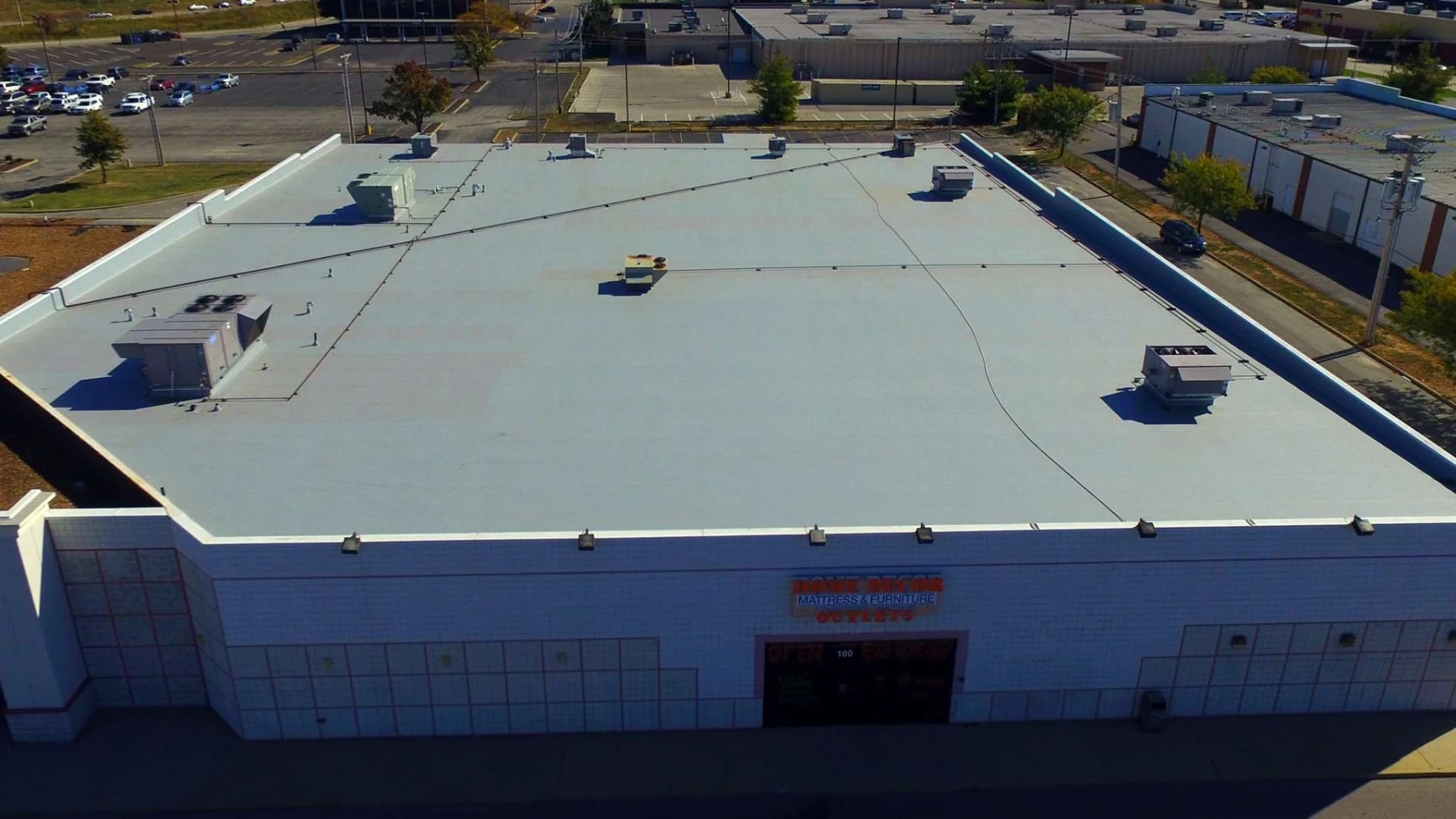
TPO 60-Mil Roofing in Las Cruces, NM
60-Mil TPO on Las Cruces Low-Slope Roofs
Sixty-mil TPO is the membrane we spec most often on retrofit work in the Mesilla Valley. It's the entry thickness that still gives a facilities team a real service life against the sun load we get at this elevation, without pricing a reroof out of budget.
Why 60-Mil Is Our Default on Retrofit Bids
On a straightforward recover or tear-off over metal deck - office buildings, small retail, self-storage - 60-mil TPO covers the wind uplift and puncture resistance most manufacturers will warranty without a premium upcharge. It's the thickness most reps quote first because it hits the sweet spot between material cost and field performance on a roof that isn't loaded with foot traffic or heavy mechanical equipment.
We still walk owners through the tradeoff. Eighty-mil costs more per square but buys thicker material over fasteners and at seams, which matters more on buildings with frequent rooftop work orders than it does on a building nobody walks except us twice a year.
UV Load at 3,900 Feet
Las Cruces sits high enough, and dry enough, that UV exposure on a roof membrane runs well above what the same product sees at sea level. Thinner atmosphere means less filtering, and our mostly cloudless calendar means the membrane is getting full-strength sun almost every day of the year, not only in summer.
White TPO reflects a good share of that load and keeps surface temperatures lower than a black membrane, which slows the heat-driven side of aging. But reflectivity alone doesn't stop UV degradation of the polymer itself - the top-ply formulation and pigment quality matter more than most spec sheets let on, and it's why we don't treat every 60-mil roll as interchangeable.
Thermal Movement and Seam Integrity
Spring and fall bring us daily temperature swings of 35 to 45 degrees, sometimes more. A membrane that's rigid at 6 a.m. is soft and expanding by 2 p.m., and that cycle repeats for months at a time. Welded seams take the brunt of that movement, especially where the membrane meets parapets, curbs, and pipe boots.
We probe every seam during install and again at first-year walkthrough, because a weld that looks fine going down can open a hairline gap after a season of expansion and contraction. Most of the leaks we get called out for on 60-mil roofs trace back to a seam or a penetration detail, not a field puncture.
Fastening pattern matters here too - a mechanically attached system needs a layout rated for the wind exposure category of the building, and we adjust that based on parapet height and how exposed the roof is, not only a generic table.
Dust, Grit, and Rooftop Traffic Wear
Wind events carry a lot of fine dust and grit across open roofs here, especially on buildings near open lots or ag ground on the edge of town. That grit settles into low spots and gets ground into the membrane surface anywhere there's regular foot traffic - RTU access paths, roof hatches, satellite dish runs.
We lay walk pads on every access route during install rather than leaving it for the maintenance crew to figure out later. It's a small material cost against a membrane surface that otherwise gets sanded down year after year by dust and boot traffic.
- Membrane thickness certificate matching the 60-mil spec, not a nominal claim
- Fleece-back vs. non-fleece-back - fleece adds puncture resistance under mechanically attached systems
- Walk pad placement at every RTU, hatch, and dish access path before turnover
- Drain sump and scupper tie-in detail reviewed against existing roof slope
- Fastening pattern rated for the building's actual wind exposure, not a generic table
- Warranty type - no-dollar-limit vs. material-only - and what voids it
- Flashing height at parapets, at minimum 8 inches above finished roof
Monsoon Drainage on a 60-Mil Field
Most of the year this roof stays bone dry. Then July through September we get monsoon bursts that dump more rain in twenty minutes than we saw the prior six weeks combined. Drains and scuppers sized for a slow, steady rain event get overwhelmed fast when the volume shows up all at once.
We check ponding areas on every 60-mil job before we ever price it, because standing water after a burst isn't unusual on a low-slope roof - the question is whether it clears within 48 hours or sits and starts stressing the membrane at seams and around drains.
When 60-Mil Isn't the Right Call
Buildings with food processing exhaust, ag storage traffic, or a planned rooftop solar array usually move us to 80-mil instead. More equipment traffic and more penetrations mean more chances for a thinner membrane to take a hit it can't shrug off. We'd rather have that conversation at the bid stage than after a puncture callback. See our 80-mil TPO page for where that line sits.
Questions We Get From Building Owners About 60-Mil TPO
How long does 60-mil TPO actually last in Las Cruces heat?
Most 60-mil TPO roofs we install here run 15 to 20 years before recover or replacement, depending on membrane color, rooftop traffic, and how quickly ponding issues get addressed. Buildings with heavier mechanical traffic tend to land on the lower end of that range.
Does white TPO stay noticeably cooler than gray or tan here?
Yes, surface temperature readings on white membrane run 30 to 50 degrees cooler than darker colors on a July afternoon. That helps the membrane and the insulation underneath, and it can take some load off rooftop units on buildings that run cooling hard.
Can 60-mil TPO handle standing water after a monsoon burst?
Short-term ponding that clears within a day or two isn't a problem for the membrane itself. Water that sits for days at a time, especially near a seam, is what we flag for a drainage fix rather than just monitoring it.
Do you field-weld seams or rely on factory-applied seam tape?
We hot-air weld every field seam on site and probe each one before covering it. Factory seam tape has its place on smaller detail work, but field welding is what gives us a seam we can verify before we leave the roof.
What's the fastest way to void a 60-mil TPO warranty out here?
Unauthorized rooftop penetrations - satellite installs, HVAC swaps, solar mounts - done without notifying us or the manufacturer voids coverage faster than anything else we see. Second most common is skipping the annual inspection that most NDL warranties require.