
- Home
- Commercial Roofing Services
- TPO Single-Ply Roofing in Las Cruces, NM
Commercial Roofing Services
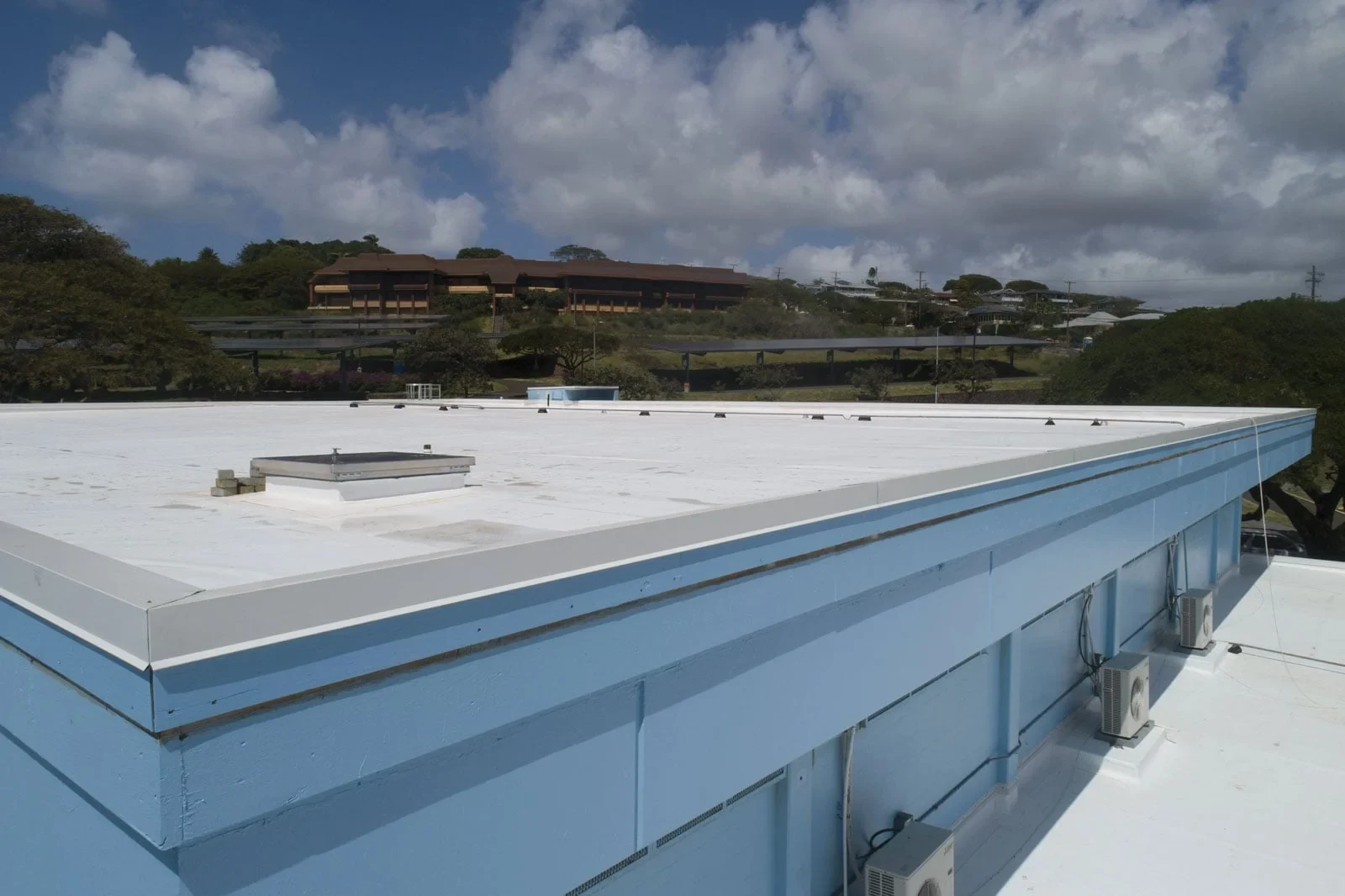
TPO Single-Ply Roofing in Las Cruces, NM
Why TPO Is the Default Call for Flat Roofs West of I-25
TPO is the membrane we spec most often on flat roofs across Las Cruces, from West Mesa distribution buildings to retail pads along East Mesa. It gives us a reflective, heat-welded system that holds up to the two things that punish roofs here hardest: constant UV and sudden heavy runoff during monsoon season.
Reflectivity Matters More Here Than in Most Markets
This valley sits at elevation in open desert, and the sun load on a roof surface at midday is intense for most of the year. A white TPO membrane reflects a large share of that heat back instead of absorbing it into the deck, which cuts rooftop unit run time on buildings that are already fighting cooling loads all summer.
That reflectivity matters twice over on occupied buildings -- clinics along Telshor, retail with customers inside, multifamily property with tenants who feel every degree the HVAC system can't keep up with. A darker roof pushes more heat into the building envelope and shortens the life of the membrane itself under that UV load.
Heat-Welded Seams for Monsoon Downpours
TPO seams get hot-air welded into a single homogenous sheet rather than relying on adhesive or tape. That matters when monsoon season hits, because the storms here aren't gentle steady rain -- they're short, violent downpours that can dump more water in twenty minutes than a drain system sees the rest of the month. A weak seam is where that water finds its way in.
We test welds as we go rather than waiting for a final walkthrough, because a seam that looks fine cold can open under the thermal cycling a roof here goes through between a hot afternoon and a cool desert night.
Where We Spec TPO Around the Valley
TPO shows up across nearly every building type we quote, but a few come up constantly:
- Distribution and warehouse buildings in West Mesa Industrial Park
- Big-box and multi-tenant retail on the east side
- University-adjacent office and classroom buildings
- Medical office buildings along the Telshor corridor
- Grocery and food retail with heavy rooftop refrigeration
- Multifamily property roofs needing a low-odor recover option
Ag processing buildings are the one place we look harder at alternatives, since grease and chemical exposure from some operations calls for PVC instead. TPO is not the answer for every roof, and we say so when it isn't.
Around the NMSU campus edge and the older commercial blocks near downtown, we also see a lot of roofs where TPO goes down as a recover over an existing built-up or modified bitumen deck rather than a full tear-off. If the substrate is dry and the insulation underneath is still doing its job, that's usually the more efficient path for an owner working with a fixed budget.
Fastening and Thermal Movement
Mechanically fastened TPO gives us a predictable wind uplift rating, which matters during the gusty pre-monsoon weeks when dust storms roll through ahead of the rain. We spec fastening pattern and perimeter attachment based on building height and exposure, not a one-size template applied to every roof.
The daily swing between a hot roof surface and a cold desert night puts real stress on membrane and fasteners over a year of cycles. We account for that expansion and contraction in how we lay out sheets and secure perimeter and field, rather than treating it as a problem for year five.
What an Install Looks Like on an Occupied Building
Most TPO work we do happens over an occupied space -- a clinic, a retail floor, a distribution operation running shifts. We stage material off the active loading areas, sequence loud welding work around tenant hours where we can, and keep the roof dried in at the end of every work day so an afternoon monsoon burst doesn't turn into an interior call.
We walk the finished roof with the facilities manager before we're done, not after an invoice goes out, so anything that needs a second look gets caught while our crew is still on site.
Dust is a factor most crews from outside this region don't plan for. Between monsoon cells, blowing dust can settle across a roof surface fast, and we sweep and inspect drains before closing out a work day rather than assuming a clean roof stays clean until the next visit.
Questions We Get About TPO
How thick a TPO membrane do you recommend?
It depends on foot traffic, rooftop equipment density, and exposure. We walk the specific roof and match membrane thickness to what it actually has to withstand rather than defaulting to one gauge.
Is white TPO always the right color choice?
Almost always for reflectivity and cooling load, but a few buildings with specific aesthetic or code requirements call for a different approach. We discuss that during the walkthrough.
Can TPO handle ponding water after a monsoon storm?
Short-term ponding after a heavy burst is normal on a flat roof. Standing water that doesn't drain within a day or two points to a slope or drainage problem we'd want to address separately.
Do you install TPO over an existing roof or only on tear-offs?
Both, depending on deck condition. If the existing substrate is sound and dry, a recover can be the more efficient option -- we cover that in more detail on our recover and overlay page.
How do you handle rooftop penetrations on ag or food processing buildings?
We detail every penetration individually rather than relying on a standard boot, since processing buildings often carry more roof-mounted equipment than a typical office or retail roof.